
By Emma Martinez
Many of the world’s biggest developments aren’t confined by borders. From conflict and climate risk to humanitarian emergencies, what’s happening overseas matters right here in Dillon—and everywhere.
Escalating Conflicts and Global Risk
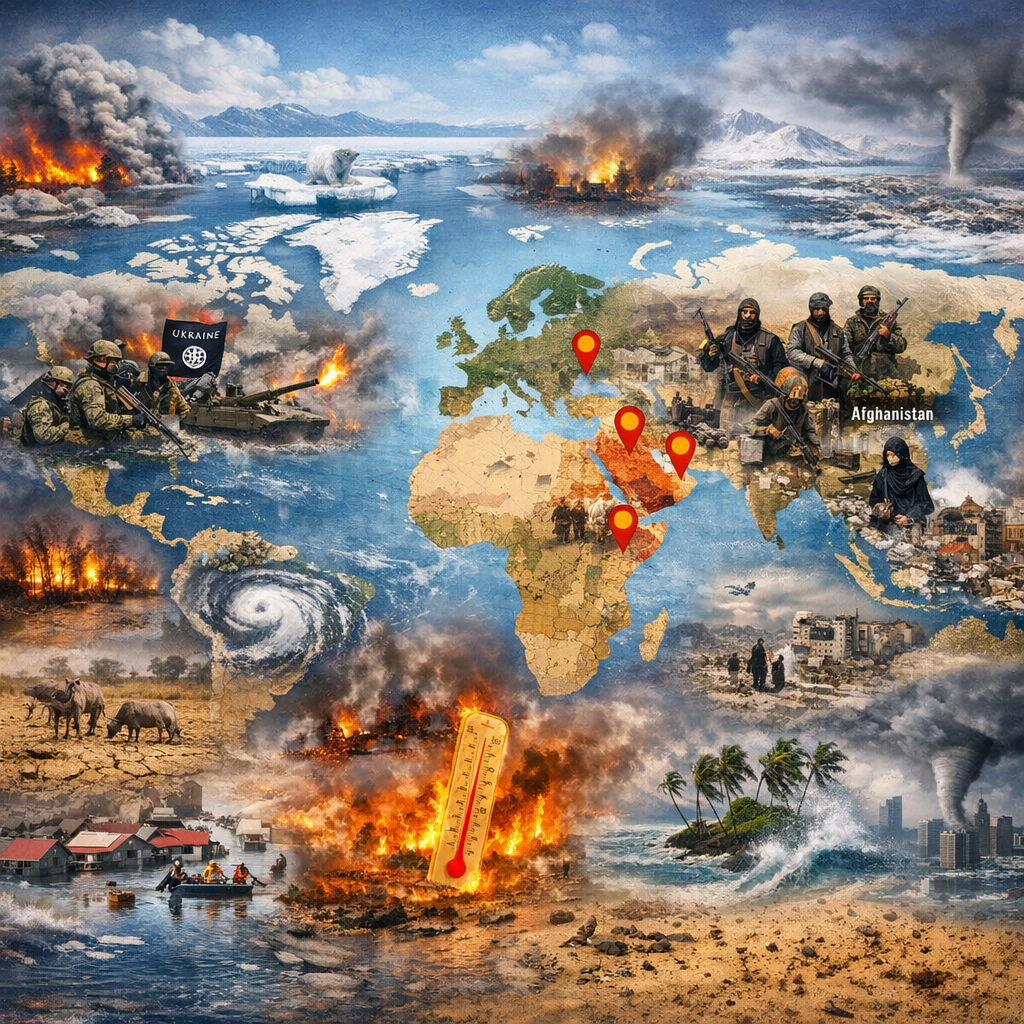
Conflict is growing more widespread and severe than it’s been in decades. Civil wars, cross-border tensions, and military actions are intensifying—or simmering just below the surface—in places like the Middle East, Sudan, Ukraine, and South Asia. The likelihood of war or sharp escalation is ranked by international analysts among the top global threats. Experts warn that the world is entering a period of strategic uncertainty where missteps by any country could lead to wider confrontation.
The Iran–US–Israel Confrontation
One of the most volatile fronts is the confrontation involving Iran, the United States, and Israel. Tensions over nuclear developments, strikes on facilities, and the disruption of key trade routes like the Strait of Hormuz are fueling broader economic and geopolitical ripple effects. Even countries not directly involved are feeling impacts—from energy prices to security concerns in nearby regions.
Sudan and Civil Conflict
Meanwhile in Sudan, a civil war between major factions is dragging on with devastating civilian costs. Displacement, food insecurity, and spillover into neighboring states remain top concerns. Because of its long duration and minimal international attention, it’s considered a fragile conflict that’s likely to endure.
Climate Extremes & Humanitarian Pressures
Climate isn’t just an environmental issue—it’s reshaping political stability and public health. Scientific research is increasingly confirming that climate shocks like droughts or heatwaves can push fragile areas toward conflict, particularly where governance and infrastructure are weak. Another major trend: countries most impacted by climate change are often the ones with fewer resources to respond, deepening global inequalities.
The Rising Threat to Civilians
With so many places in crisis, the human cost keeps climbing. Over 200 million people now need humanitarian aid, and nearly 120 million have been displaced. Refugee flows are stressing medical systems and food supply chains. Cutbacks in international assistance threaten to leave many without help at all.
Why You Should Care in Dillon
Even in the Rockies, we’re not immune to these global trends. Energy markets affect gas prices, climate-driven supply shocks make food cost more, and migration—though uneven—reshapes global demographics. Plus, in an interconnected world, instability anywhere can ripple everywhere.
What Could Bring Hope?
- Strengthened diplomacy and multilateral agreements that address both climate risk and conflict prevention.
- Increased investment in humanitarian aid and support for displaced populations.
- Global cooperation on climate science and mitigation, especially for drought-prone and vulnerable regions.
- Civic engagement—from here in Dillon and beyond—pushing for policy that centers peace, equity, and sustainability.