

By Henry Torres
This isn’t your typical travel piece or tourism marketing—it’s a talk about what Dillon means to us who live here. What daily life feels like, where we see tension, and what values keep popping up when we raise questions about how we’re growing.
Anchors of the Dillon Identity
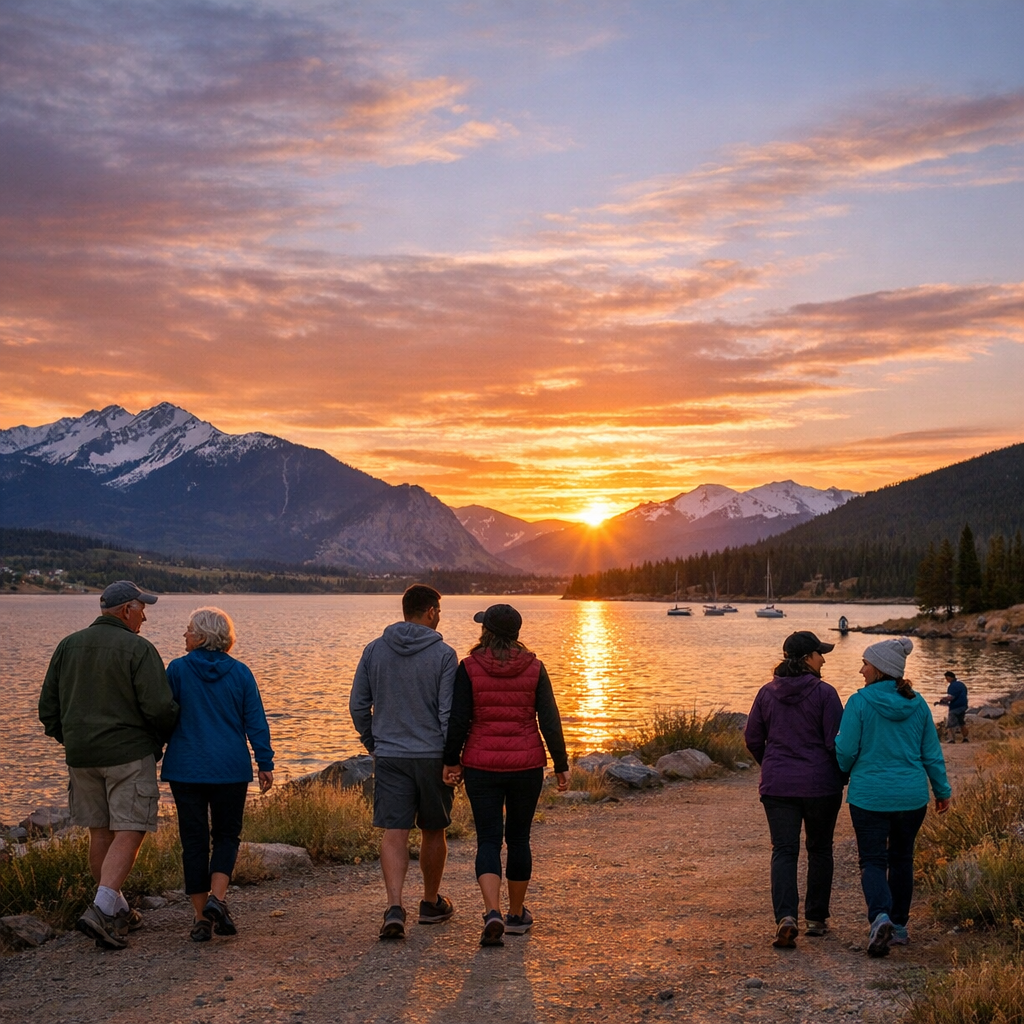
Many of us moved here because of the landscapes—the lake, the mountains, the trail systems. We greet visitors but we mostly live in terraces of sky above winters and the smell of pines. We care deeply about dark skies, lake views, nature access, and the walkable streets near the town core. These are not luxury amenities in Dillon; they’re the quality-of-life anchors.
Community events—whether it’s the farmers market, Monday night concerts at the amphitheater, or a spontaneous gathering at the marina—do more than entertain. They help us touch what’s already here: a small-town warmth. Even when it’s cold, people drop by to chat. It’s easy to take that for granted until circumstances threaten it.
Growth That Feels Right—or Doesn’t
We see development creep in: new housing, commercial spaces, infrastructure. It can be welcome—especially when we need affordable housing for workers, options for local businesses, or improved public spaces. But it can also feel like change not shaped by us. Too much focus on visitors, too many short-term rentals, or projects that stretch the town core past what our roads, services, and character can sustainably support.
What often worries people—especially longtime residents—is whether growth respects Dillon’s mountain-lake personality. Will walkability be preserved? Will dark skies be traded for flashy lighted signs? Will commerce drown out lived culture? Our biggest debates are less about whether we should grow, and more about how, and who is in charge of the decisions.
Trust, Participation, and the Hard Work of Listening
One thing that comes up again and again in public meetings: residents want transparency. They want updates that make sense, they want communication that doesn’t feel like it’s filtered, and they want to see follow-through. It’s exhausting when you show up, speak, then see nothing change—or see decisions already made before input was gathered.
At the same time: “participation” doesn’t just mean showing up once. It means sustained conversation. It means intentional inclusion of people who don’t always speak in public meetings—service workers, young families, renters. When decisions are informed by a range of life experiences, Dillon feels more rooted, more equitable.
Looking Ahead—What’s at Stake
If we lean into the values Dillon’s built on, there are positive options in front of us: public spaces designed for shared use, business incentives that favor locals as well as visitors, housing policy that supports both workforce and longtime resident needs, conservation practices that protect what’s wild and what’s beautiful.
My hope is this: that Dillon remembers it’s a community first. That we try to figure out how growth serves people who already live here just as much as people who come through. That preserving identity isn’t nostalgia—it’s careful attention to the way we walk, talk, build, and listen.
Because if those anchors—nature, culture, trust—aren’t nurtured, everything else becomes hollow. And that’s not the future most of us came here for.